
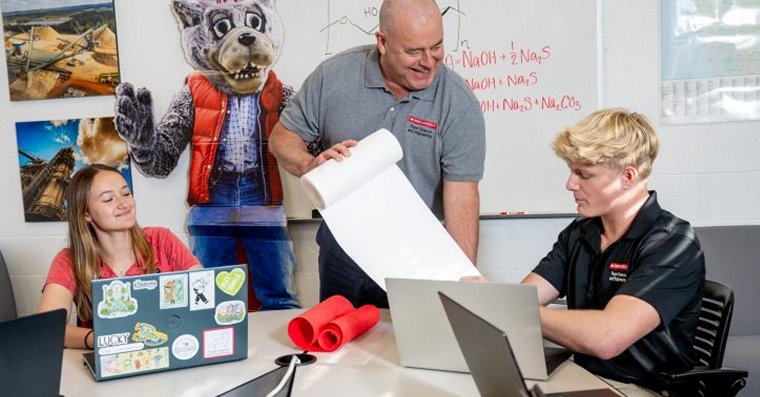
 NC State's Paper Science & Engineering Program offers something rare in higher education: a dual degree in Paper Science and Chemical Engineering that blends rigorous theoretical foundations with deeply applied, industry-relevant training.
This article was originally published by Two Sides North America and posted on their website.
Oct. 8, 2026 (Two Sides North America) - The paper and forest products industry sits at the crossroads of sustainability, innovation, and advanced manufacturing, yet it remains one of the best-kept secrets in engineering. At NC State University, the Paper Science and Engineering (PSE) program is working to change that, producing graduates who are uniquely equipped to lead an industry undergoing rapid transformation.
NC State's PSE program offers something rare in higher education: a dual degree in Paper Science and Chemical Engineering that blends rigorous theoretical foundations with deeply applied, industry-relevant training. Unlike traditional engineering curricula that have remained largely unchanged for decades, PSE continuously evolves its coursework to reflect shifting market demands. Students gain expertise in process control, sustainable packaging design, and emerging applications of cellulose-based materials, from nanocellulose barriers replacing plastics to pharmaceutical-grade cellulosic gels.
What makes the NC State version distinctive is its refusal to be static. The program has introduced a Future Ready Initiative to modernize labs and student spaces, added earlier and expanded process control coursework, and developed minors in areas like process control and packaging applications. The result is a curriculum that mirrors the real world, not a textbook from 30 years ago.
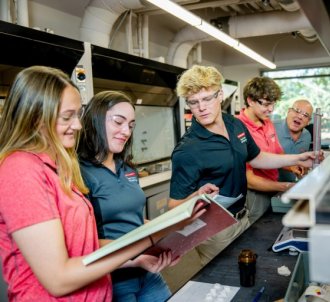 NS State PSE students graduate as adaptable engineers trained to drive out process variability, integrate AI into manufacturing systems, and approach problems with an economic and sustainability lens that modern industry demands.
The numbers speak for themselves. PSE graduates leave NC State with an average of 10 months of work experience through required internships and co-ops, putting them roughly two years ahead of peers from traditional programs when they enter the permanent workforce. The program has led the university in graduate starting salaries for approximately 40 consecutive years.
But the impact goes beyond compensation. Students are surprised to discover that their "Paper Science" degree opens doors across packaging, pharmaceuticals, hygiene products, advanced materials, and beyond. They graduate as adaptable engineers trained to drive out process variability, integrate AI into manufacturing systems, and approach problems with an economic and sustainability lens that modern industry demands.
The paper and forest products sector faces a talent pipeline challenge of significant scale, with demand estimated at nearly 1,000 engineers annually due to an aging workforce. The next generation brings critical capabilities: fluency in advanced data analysis and AI-driven predictive process control, comfort with non-traditional solutions, and a broader perspective that balances engineering excellence with economic reality.
According to program faculty, students are often struck by the scale of the industry's reforestation efforts and the range of products possible from sustainable cellulose fiber, from biodegradable packaging and barrier coatings to pharmaceutical and hygiene applications.
Industry partnership is the engine that powers PSE's success. Companies fund scholarships and endowments that attract top talent, sponsor real-world senior design projects solved in team settings, and provide the internship experiences that distinguish these graduates. A program advisory committee of industry partners actively shapes curriculum content and timing, ensuring interns are effective from day one.
For companies, the return is clear: access to graduates who are applied, experienced, and ready to contribute immediately. For students, it means stepping into careers where sustainability meets innovation, and where their work has a tangible impact on the circular economy. Together, academia and industry aren't just filling a pipeline; they're building the workforce that will define the next era of sustainable manufacturing.
Two Sides North America (TSNA) is a member-supported non-profit advocacy organization for the graphic communications, paper, and paper-based packaging industries. Two Sides North America works to dispel common environmental misconceptions and to inspire and inform businesses and consumers with engaging, factual information about the environmental sustainability and value of print, paper, and paper-based packaging. They are the only group that works to dispel and pursue the removal of greenwashing language used by companies and organizations in North America. To learn more, visit: twosidesna.org
SOURCE: Two Sides North America