
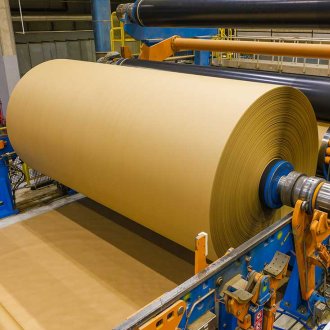
 AICC pointed out that there have been three price increase announcements by the majority producers of containerboard in just five months.
By Alyce Ryan, Director of Marketing, AICC
Aug. 11, 2026 - AICC, The Independent Packaging Association represents and protects the business interests of our members in the independent sector of the corrugated, folding carton, and rigid box industries. There have been three price increase announcements by the majority producers of containerboard in just five months; most recently PCA's announcement of a $140/ton (liner and medium) increase effective September 1, 2026; IP announced $80/ton for September 1, 2026, and Smurfit Westrock announced $100/ton.
These latest announcements all took place within 3 days of each other.
AICC believes these increases are without economic justification based on current raw material inputs and economic data. Producers cite (as they have, again without objective justification, and unconvincingly in such a relatively short period of time in between them) economic need, high operating rates (e.g., Inflation, fuel, labor, insurance), and tight supply to justify these increases. AICC is skeptical of these reasons in the current containerboard and corrugated market.
Arguably, the increases are reflective of a small group of producers having market dominance.
PCA, Smurfit Westrock, International Paper comprise ~63% of the containerboard/linerboard supply market.1
PCA is 95% vertically integrated, which means they only sell 5% of their mill capacity on the open market. IP and Smurfit Westrock have major open market sales, but keep in mind that Independents only comprise about 10% - 12% of the marketplace.
It is noteworthy that producers' prices have risen in the past 5 years in down market.
Announced increases are imposed on, and disproportionately impact, independent box makers.
Various sources have reported that 10% of mill capacity has been removed from the market in the past year. However, half of the removed capacity was mills producing exclusively for export. Additionally, some mill outages are temporary due to natural causes, e.g., IP's Louisiana mill suffered damage due to a natural disaster.
IP's Andrew Silvernail, on an earnings call last week, stated that the increase was a "supply story." But when asked about demand the response suggested the modest increase in the second half of the year in the United States and Europe was expected, i.e., anticipated (and, thus, presumably
There is no knowledge at this time as to whether the producers of the remaining 37% will also increase price.
considered in the first or the first and second increases).
Silvernail continued in his market and economic assessment suggesting that what's going on with inflation and affordability mutes the overall market. His conclusion, based on the analysis in his presentation, was going into the second half of the year, the expected pickup of about a point has been downgraded to effectively being flat in the second half of the year in North America and up modestly in in Europe, in the second half of the year.
Three increases in the same year are unusual, but not unprecedented. Three increases happened in 1994 and 2010. However, economic conditions were different, more severe and unpredictable, in both. In 1994, the financial sector faced notable turbulence. The Federal Reserve surprised markets by aggressively raising interest rates, which triggered a severe global bond market crash known as the "Great Bond Massacre." 2010 was a period of lingering economic turmoil and a fragile, slow recovery following the Great Recession of 2007-2009. Notwithstanding these data point, neither of those "three increase years: were of the magnitude announced in the 2026 combination.
All 3 suppliers continue to export 400K/tons/month at a price >/= $600/ton. Domestic consumption of board is averaging around $750/ton in July (+/- depending on grade).
The two earlier in the year announced $50/ton price increases (March 1/June 1) are not yet fully absorbed into the marketplace, as stated by the suppliers themselves, and confirmed by many converters.
None of the three increases appear to be related to box demand which is at 2016 levels.
OCC pricing (for recycled boxes) has hardly moved at all and certainly in no way in lock step with the magnitude of these three price increases.
RISI and Bloomberg, the two published indexes in the marketplace have not agreed, been in parallel, or even close to each other all year.
With the latest increase, paper would be up 45% compared to Q1 of 2024. Demand has plummeted since Covid.
History has shown that producers announce large increases with the hopes of ultimately obtaining a meaningful, but lesser rise in the transacted prices. In essence, they are testing the resolve of the market. The first two prior increases were not warranted, as explained above, by demand but "stuck". This leads to the reasonable conclusion that these prior price increases mathematically preemptively anticipated subsequent demand increase. Thus, the most recent increase is not justified by traditional supply and demand metrics.
AICC members constitute a majority of privately held independent converters in North America. While we recognize the need for all our suppliers to operate profitably, it should not be at the expense and long-term health and viability of another distinct market player, the independent sector. These announced increases came without the normal justifications relating to input costs or market dynamics and thus they are unjustified at this time.
Founded in 1974 for independent corrugated converters, AICC has since evolved to include independent packaging manufacturers in folding carton, rigid box, and other diverse segments of packaging its members provide.
SOURCE: AICC