
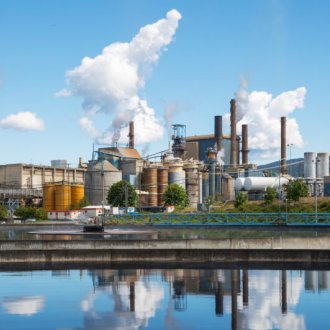
 "While other jurisdictions face similar trade pressures, BC's coastal forestry sector has been uniquely harmed by regulatory uncertainty. We are one pulp mill closure away from the total collapse of coastal forestry." – Campbell River Mayor Kermit Dahl at a press conference, Sept. 22, 2025. (pictured above: Domtar's pulp mill in Crofton, BC. Domtar on Dec. 2 announced that it will close the mill.
Dec. 3, 2025 - Kim Haakstad, President & CEO of the BC Council of Forest Industries (COFI) issued the following statement in response to the announcement of additional mill closures in British Columbia (Canada):
"COFI extends our deepest concern to the workers, families, and communities affected by today's closure announcement. For too many people across this province, the consequences of inaction for the struggling forestry sector are no longer theoretical — they are happening in real time.
"We have been sounding the alarm that the situation in BC is dire and today is further evidence that the sector needs an urgent response from our government. While softwood lumber duties and trade uncertainty add significant pressure, not everything can be blamed on the dispute. It is important to focus on the areas within our control, and those remain the core issues facing BC forestry: access to predictable, economic wood supply and the ability to operate in a competitive and efficient regulatory environment.
"The solutions are well known and long overdue. The provincial government must urgently:
Remove barriers to getting wood moving by improving the efficiency and timeliness of cutting permits and road-building approvals, and fast-tracking improvements to BC Timber Sales to get wood to the market.
Address operating costs both at the harvest level and in manufacturing facilities, where BC mills face mounting administrative and regulatory burdens.
Support First Nations with the capacity and tools to expedite referrals, co-develop land use plans with the BC government and industry, and increase revenue sharing — so that partnerships can move at the speed of opportunity.
"These steps are essential not only for sawmills and pulp mills, but for the entire forestry value chain — the loggers and truck drivers, the unionized mill workers, the bioenergy and mass timber producers, and the thousands of small businesses that rely on the sector. When mills close, it is not only the mill workers and their families that suffer — it is the local nurses, the gas station owners, the cafe workers and the many small businesses and service providers who keep rural and small communities alive."
"Local leaders have made it clear what these ongoing closures and curtailments mean for their communities:
"At the council office, we are concerned about the potential loss of tax revenue that will come from all the layoffs. People need to be able to feed their families before they can pay taxes. With less tax revenue, the town might not be able to afford to provide basic services for our residents, like trash collection and road clearing." – Williams Lake Mayor Surinderpal Rathor in Macleans, November 20, 2025.
"While other jurisdictions face similar trade pressures, BC's coastal forestry sector has been uniquely harmed by regulatory uncertainty. We are one pulp mill closure away from the total collapse of coastal forestry." – Campbell River Mayor Kermit Dahl at a press conference, September 22, 2025.
"We want the government to commit to the promised allowable cut of 45 million cubic metres for 2025 and maintain these levels for future years. We anticipate a continued decline in volume harvested, compounded with softwood lumber duties and U.S. tariffs, will potentially devastate the forest industry and result in the closure of more mills, meaning communities like ours will lose family-supporting jobs and major taxpayers, exacerbating the already high cost of living that our residents are facing." – North Cowichan Mayor Rob Douglas and Nanaimo Mayor Leonard Krog in a letter to Forests Minister Parmar, April 26, 2025
Haakstad continued, "We acknowledge the recent steps taken by the federal government, including enhanced liquidity supports and expanded employment relief programs. But the most effective way to protect workers is to keep their workplaces open. Now the Province must act with urgency to stabilize wood supply, restore competitiveness, and reverse the steady loss of jobs and investment.
"Without swift, decisive action, BC will continue to see more closures, more families uprooted, and more communities eroded. Instead of realizing the full potential of BC's world-leading forest products, we are continuing to lose ground domestically and globally as highest cost jurisdiction in North America.
"COFI and our members are at the table, ready to work with government, First Nations, labour, and communities to find solutions that can stabilize the sector and rebuild confidence. But we need the province to step up now — not months from now, not after further losses. The time for urgent action was yesterday," Haakstad concluded.
The average BC pulp mill contributes $200 million in GDP annually to the province. The BC forest industry:
The BC Council of Forest Industries (COFI) represents the interests of British Columbia's forest industry, advocating for policies that support sustainable forest management, economic prosperity, and the well-being of forest-dependent communities.
SOURCE: Council of Forest Industries (COFI)